

The healing benefits of garlic has been well documented for centuries. The process of aging garlic and incorporating it into a dietary supplement was developed in the early 1950s. But what is Aged Garlic Extract and how can it benefit your health? Here we answer all of your pressing questions about this powerful supplement.
The Ultimate Guide to Aged Garlic Extract
What is the difference between garlic and aged garlic extract?
Who should take Aged Garlic Extract?
Aged Garlic Extract Vs Fish Oils
How to get started with aged garlic extract
Garlic supplements have seen a rise in popularity in recent years but throughout the ages, garlic has been credited with numerous health benefits. Hippocrates, widely known as the “father of medicine,” prescribed garlic to treat wounds, fight infection, and ease digestive disorders. Garlic’s reputation as a medicinal wonder continued into the Middle Ages. It was used in attempts to prevent the plague, cure leprosy, and treat a long list of other ailments.

Traditionally, garlic bulbs were prepared in a variety of ways for medicinal purposes. The juice of the bulb was extracted and taken internally, while the bulb was ground into a paste for external treatment. Today, garlic is still a popular natural remedy for many ailments and general good health.
Sautéing a couple of cloves of garlic with your veggies…great. Adding some garlic to your scrambled eggs to give them a boost…perfect! Garlic is great for adding some flavor to certain foods, but if you are looking to gain some substantive health benefits from that garlic, a couple of cloves will not cut it. Studies have shown that raw garlic is necessary in high doses, about 5-28 cloves per person, per day, to feel the health benefits (1). Whereas garlic supplement dosage is much lower and offers many other benefits.
What are Garlic Supplements?
Garlic can be made into powders, oils, tinctures, tablets, and capsules. All of these have enjoyed much popularity over the years thanks to garlic’s reputation for antioxidant and antimicrobial properties. Did you know garlic was even used to treat wounds, many years ago? But modern science and research have revealed the added benefits of garlic that can be found in creating Aged Garlic Extract. Speaking of science, there are over 870 peer-reviewed published scientific articles on Aged Garlic Extract to back up the safety and efficacy of this unique nutrient.
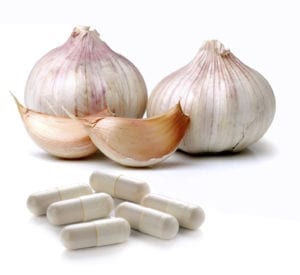 Aged Garlic Extract (AGE) is a form of garlic created using a proprietary aging process. Kyolic® AGE™ is made from garlic grown on certified organic farms in California’s Central Valley, where it is cultivated without the use of chemical fertilizers, herbicides, or pesticides. The garlic is harvested at its peak, then sliced and naturally aged for up to 20 months, unheated. Over 250 quality tests are conducted during the aging and manufacturing process to ensure the product meets nutrient compound standards for purity and potency, as well as overall product quality. One of the great side benefits of the aging process is that it removes the garlic odor and taste.
What is the difference between garlic and Aged Garlic Extract?
For some of us, the odor of raw garlic is not acceptable, not to mention the digestive discomfort – especially if you need to take more than five cloves of raw garlic to derive some benefit!
We are often asked: will I get the same benefits if I use garlic in all my meals as I will if taking aged garlic extract?
Simply answered, no. Garlic used in cooking will not give you the same benefits as an Aged Garlic Extract supplement.
The proprietary process of creating AGE increases garlic’s antioxidant potential and converts harsh and unstable organosulfur compounds into the odorless, non-irritating, and bioavailable compounds that are responsible for AGE’s numerous health benefits. Learn more about the chemistry of garlic.
Throughout the ages, the compound credited for garlic’s benefits was allicin, which is produced when fresh garlic is chopped or crushed. Although allicin appears to provide antibacterial, antifungal, and antioxidant benefits in test-tube experiments, human trials haven’t shown the same results. This is likely because, when allicin reacts with blood, it oxidizes and quickly metabolizes before it can do any good. Allicin is a transient constituent of garlic preparations and does not pass through the intestines or enter the bloodstream. It appears to have no beneficial effect internally.

The process used to create Kyolic AGE results in very stable and consistent nutrient compounds in every product – from batch to batch. This makes clinical studies that include AGE very reliable.
There are over 870 published peer-reviewed scientific articles regarding Kyolic AGE and a number of these include meta-analysis that look at multiple studies to find a correlation between garlic and cardiovascular health. As one published study summarized, “The most consistent benefits were shown in studies that used aged garlic extract (AGE)”.²
However, as a growing number of studies show, there’s significantly more to AGE’s health benefits than just cardiovascular improvements. So is AGE right for you?
Who should take Aged Garlic Extract supplements?
Although many of the clinical studies have focused on the cardiovascular benefits of AGE, there are also a number of research papers that demonstrate its immune, gut microbiota, and inflammation benefits. So anyone that is seeking a supplement to support whole-body wellness may benefit from taking AGE. Understanding your body, your family history, and your long-term health goals will help direct you to the most appropriate supplements. Kyolic AGE comes in a variety of formulas that help target specific health conditions. So, whether you are seeking ways to lower your cholesterol, improve your blood pressure or reduce the effects of stress or inflammation, there may be a Kyolic formula that is right for you.
What are the main benefits?
- Immune System Support
 A study conducted by the University of Florida found that high-potency AGE can reduce the duration of the common cold or bout with the flu by as much as 61 percent.³ During this clinical trial, researchers gave 120 healthy adults a daily dose of either 2,500 mg of Kyolic AGE or a placebo. After 90 days, blood samples from each volunteer were analyzed. Compared to the placebo group, those taking the AGE supplement had a significant increase in the number of immune cells. What’s more, the supplement appeared to enhance the function of two specific types of immune cells: NK (natural killer) cells and gamma delta T cells.
One reason for this uptick in immune function, according to the authors of the study, is the glutathione-boosting ability of the sulfur-containing compounds naturally present in AGE. Other research suggests that glutathione enhances the immune response by optimizing macrophage function while protecting disease-fighting lymphocytes from oxidative damage and premature cell death.(4,5) Click here to learn about signs of a weakened immune system.
- Cardiovascular Health

Your cardiovascular system is only as healthy as the arteries that carry your blood throughout your body. Healthy arteries are flexible with a smooth, undamaged endothelium—that single layer of cells that line the inner surface of your arteries—that allows oxygen and nutrient-rich blood to flow freely to all of your organs and tissues (click here to read more about how AGE can help support the health of your arteries). But over time, the effects of heredity, unhealthy habits, and age can cause the buildup of artery-damaging plaque and calcium deposits. When arteries become damaged—a condition called atherosclerosis—blood flow can eventually be hindered or even completely blocked. However, clinical trials show that Aged Garlic Extract (AGE) can reverse the buildup of plaque and coronary artery calcification, ultimately helping to minimize the progression of atherosclerosis. (6, 7)
Other benefits include:
Garlic Extract vs Fish Oil
Traditional fish oil supplements come from several sources including salmon, sardines, and anchovies. The resulting oil from these sources contains two important omega-3s: docosahexaenoic acid (DHA) and eicosapentaenoic acid (EPA). Research shows that these two types of omega-3s are potent anti-inflammatory compounds that reduce triglycerides, improves cholesterol, lowers oxidative stress, and discourages platelets from sticking together inside arteries. There is also evidence that the DHA in fish oil modestly lowers blood pressure. (8)
These important heart-health benefits can be credited to AGE as well, and more. A rich source of manganese, vitamin B6, vitamin C, and selenium, AGE is different from the pungent garlic cloves used for cooking. The natural aging process that can take up to 20 months, converts the harsh unstable organosulfur properties in garlic into stable bioavailable compounds with numerous health properties. In addition to being a powerful anti-inflammatory, studies have shown that AGE is high in antioxidants, including carboxylic acid and L-arginine, which play an important role in cardiovascular health.
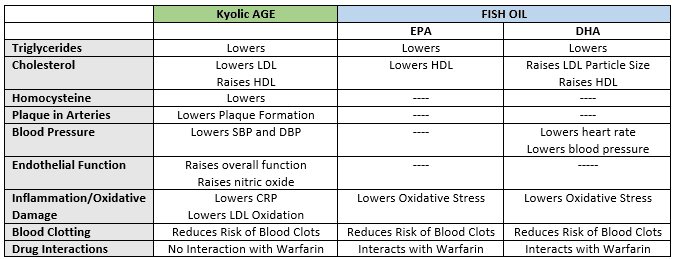
Studies show that these beneficial properties of AGE translate to real cardiovascular benefits above and beyond those provided by fish oil.
What if you combine the two? That could be a win-win. The latest formula of Kyolic AGE, Omeg-AGE, does just that, with a combination of sustainably sourced fish oils, aged garlic extract, and a blend of vitamin nutrients that make it a very unique formula. Learn more about this formula.
How to get started if AGE is right for you

If AGE sounds like a good fit, consider all the formulas to find the one with added herbs, vitamins, enzymes, or nutrients that meet your needs. Or you may want to start with the one that contains only aged garlic extract such as Cardiovascular Formula 100 or our Reserve Cardiovascular and Immune Health formula.
How much should I take?
Clinical studies usually apply dosages of 1200 to 2400 mg a day but for general use and preventative care, 600 mg a day is appropriate. For best results, follow the directions on the bottle. It’s ok to start with a smaller dosage until you know how your body may react. (for example, take it just one time a day instead of two times a day) Taking Aged Garlic Extract is a routine that will benefit you in the long term – you won’t see results in days, but more like two to three months.
How much do garlic supplements cost?
How much is your health worth? Priceless, right? But the good news is that garlic supplements are very reasonably priced. A thirty-day supply of Kyolic AGE may cost from $15 to $35 dollars at SRP (suggested retail price). Visit the store locator to find Kyolic aged garlic supplements at your local health food stores or online.
Kyolic Aged Garlic Extract is one of the most carefully grown, quality controlled, and highly researched supplements in the world. Almost anyone can enjoy the therapeutic benefits of AGE.
Is Aged Garlic Extract Safe?
We often hear the ‘myth’ that dietary supplements are not regulated so how can they be safe to take. While yes, you should ask questions and be wary of claims that sound too good to be true, if you take a little time to check on the products you are buying you can be assured that they are safe for you and your family. We always say, trust but verify.
We do a deep dive and answer is aged garlic extract safe in this post citing the science behind AGE and some frequently asked questions regarding its safety.
References
- Loy MH, Rivlin RS. 2000. Nutr ClinCare. 3(3):145-52.
- Varshney R, Budoff MJ. 2016. J Nutr. 146(2):416S-421S.
- https://pubmed.ncbi.nlm.nih.gov/26764332/
- https://www.ncbi.nlm.nih.gov/pmc/articles/PMC3749296/
- https://pubmed.ncbi.nlm.nih.gov/31540482/
- Matsumoto S. Aged garlic extract reduces low attenuation plaque in coronary arteries of patients with metabolic syndrome in a prospective randomized double-blind study. J Nutr. 2016;146(2):427S-432S.
- Zeb I. Aged garlic extract and coenzyme Q10 have a favorable effect on inflammatory markers and coronary atherosclerosis progression: A randomized clinical trial. J Cardiovasc Dis Res.2012;3(3):185-90.
- https://www.ncbi.nlm.nih.gov/pmc/articles/PMC3235507/
This article is for informational purposes only. This article is not, nor is it intended to be, a substitute for professional medical advice, diagnosis, or treatment and should never be relied upon for specific medical advice.
Share this Post